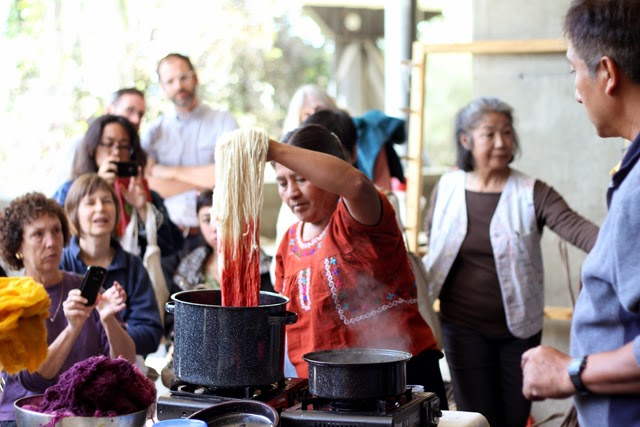
A few weekends ago, I had the chance to visit the Berkeley Art Museum's collaborative craft exhibit,
The Possible
when Mariano Sosa Martinez and Rafaela Ruiz visited from
Oaxaca, Mexico to share and demonstrate their methods for using natural
dyes to produce beautiful, rich-hued wool for textile weaving.
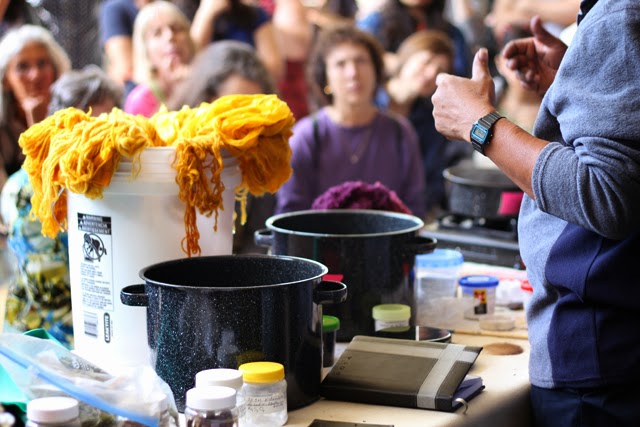
Mariano and Rafaela started an artist collective in Oaxaca, including
one for women which was the first of its kind, and have distinguished
themselves as artisans committed to growing, harvesting and using only
natural dyes. It was captivating and inspiring
to watch all the technical and artistic knowledge that went into the
detailed process of preparing and using the dyes, and to hear the
stories they shared about how the formation of their collective really
produced a change in their community, especially for women.
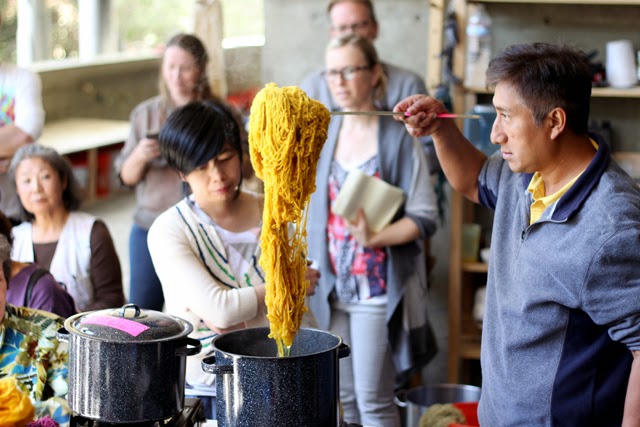
Before the collective, Rafaela and other women were not allowed to leave
their villages to go to Oaxaca city to sell their own wares. The
organization has allowed them more freedom of movement and access to to
entrepreneurial tools and opportunities. Mariano also spoke about coming
to America to work in the 80s, an experience that inspired him to go
back to Mexico to form a collective.
Mariano and Rafaela are responsible for the entire process that goes
into their textiles from growing and harvesting the natural dyes, to
dyeing the wool, weaving the textiles and selling them at market. They shared so much technical knowledge about the materials,
measurements, timing and coordination of steps went into the dyeing
process that I couldn't memorize it all. Also, the process is
different for what they described as noble fibers (wool, silk, feathers)
and hard fibers (cotton, linen), as well as different types of natural dyes.
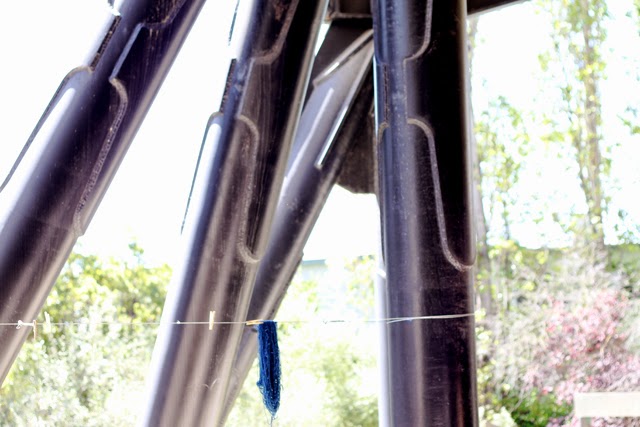
Indigo
Different from the other dyes, indigo takes once the
wool becomes oxygenated after being removed from the dye bath and exposed
to the air. Repeated dips in the bath deepen the color.
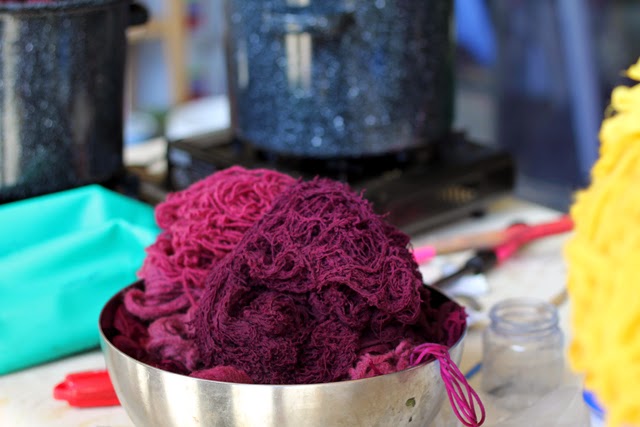
Cochineal
This dye harvested from female insects that feed on the juice of cacti ranges from reddish-pink to deep purple.
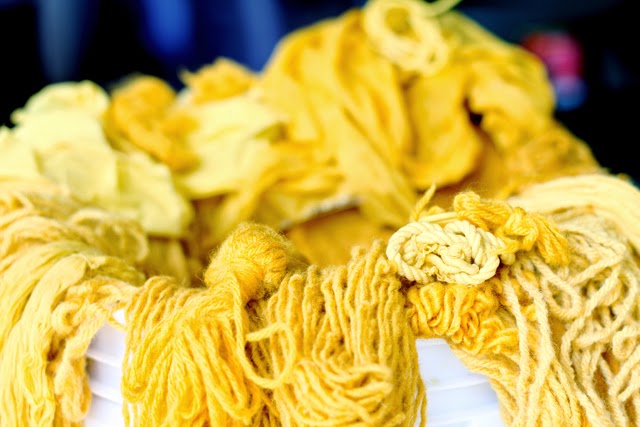
Mexican Marigold
Aka
pericón, the aromatic leaves of the Mexican Marigold are boiled to produce a deep, rich yellow.
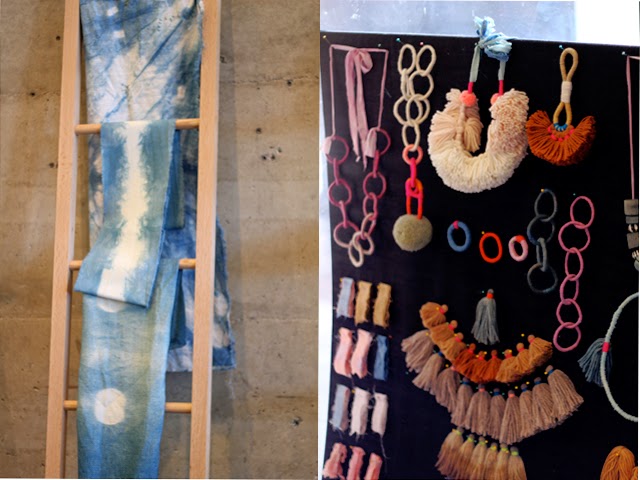
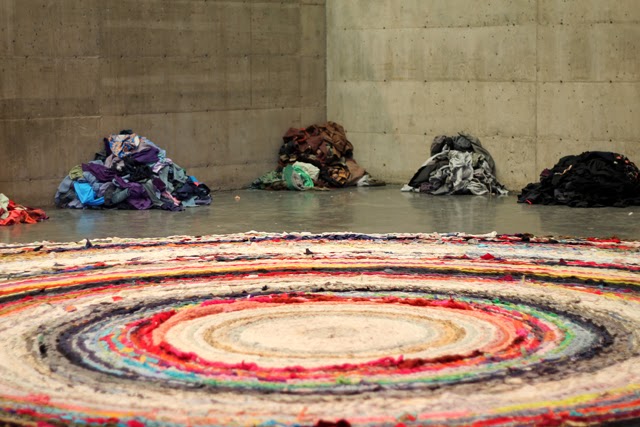
In addition to the dyeing demo, there were crafts and art on display, including Fritz Haeg's expansive
Domestic Integrities rug crocheted from discarded textiles, as well as jewelry, weavings, ceramics and more. There are still a few more Sunday workshops happening before the exhibit closes on May 25th — I highly recommend checking it out!




























 Posts
Posts


